
An updated indicator shows that 77.5% of assessed endemic species in the UK Overseas Territories (UKOTs) are threatened with extinction, highlighting the importance of continued conservation action within the UKOTs.
Endemic species are specific to a region and found nowhere else on Earth. The UK Overseas Territories are home to more than 90% of the UK's endemic species and include the St Helena Plover, known as the 'Wirebird', a national symbol proudly featured on the island’s flag. Or the Grand Cayman Blue Iguana, which had been brought back from near extinction through dedicated local conservation initiatives in the Cayman Islands.
The K3 indicator, published today by JNCC, was developed for Defra's Environmental Indicator Framework and brings together data from the IUCN Red List and additional expert-reviewed records to assess the conservation status of UKOT endemic species. Environmental indicators track progress towards goals and targets over time and are useful measures to determine where conservation efforts should be focused.
The K3 Indicator shows 632 of 1,602 UKOT endemic species were assessed using the IUCN Red List. 91 species were Data Deficient or Extinct. Of the remaining 541, 419 (77.5%) are classified as threatened (Vulnerable, Endangered or Critically Endangered on the IUCN Red List).
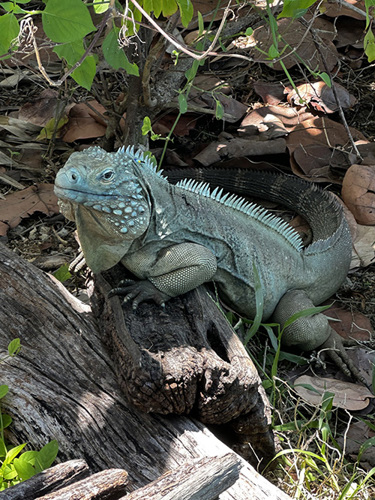
Blue Iguana © Amanda Gregory
Despite the high proportion of assessed species that continue to face an elevated risk of extinction, the results suggest that the overall picture has remained relatively stable over time. A previous assessment conducted by the RSPB in 2014 found that 77% of endemic species in the UKOTS were threatened, compared to 77.5% in 2026. Although these two assessments are not directly comparable, they follow the same methodology.
It should also be noted that thanks to the efforts of Governments, conservationists and non-governmental organisations, the number of endemic species with Red List assessments has increased from 145 to 632 species since 2014. However, 61% of the 1,602 known UKOT endemic species have not been assessed to date, highlighting the need for continued assessment efforts.
There are also encouraging signs of conservation success. Since the previous publication of the indicator in 2025, two endemic fish species from the South Atlantic region UKOTs have improved from Vulnerable to Least Concern on the IUCN Red List. These changes demonstrate how improved knowledge and conservation action can contribute to a better understanding of species status.
JNCC will regularly update this indicator to track changes in the status of endemic species over time, supporting UK Government commitments under the Global Biodiversity Framework and UK Overseas Territories Biodiversity Strategy and helping to measure progress towards biodiversity recovery across the UKOTs.
The methodology used to calculate the combined threatened species statistic was revised for this update to align with internationally accepted reporting approaches. This provides a more robust baseline for tracking future changes in the conservation status of UKOT endemic species. As a result, figures are not directly comparable with the previous update, published in 2025.
More information is available in JNCC Report 835, Environmental Indicator K3: 2026 update on the status of endemic and globally threatened species in the UK Overseas Territories.
Published: