
This year, the theme of International Geodiversity Day, celebrated on 6 October, is 'Geodiversity on our doorstep’. To mark the day, we have a blog post from our Chief Scientist, Dave Stone, who reflects on the geodiversity on his doorstep.
The importance of geodiversity in the United Kingdom
Did you know that the UK, a small country, is a big deal when it comes to geology, with a geological record stretching back over 3 billion years? On the world’s geodiversity stage, the UK is a huge player, and the UK has long been recognised as the birthplace of the science of geology. For over 200 years, scientists and natural historians, including Charles Darwin, have been piecing together the evidence of our geological history; and a number of geological time divisions, rock formations and concepts and principles were first defined here. The UK’s geology reveals how colliding continents, changing climates, rivers, volcanoes and glaciers have shaped the country’s surface. It tells us about past environments, past life forms, and extinctions and evolutions. This information enables us not only to piece together the past, but also to predict parts of the future.
Geodiversity is an integral part of nature, with a hugely important role to play in nature conservation and restoration. It is an essential part of the work of the statutory nature conservation bodies, and has been a key and world-leading component of statutory nature conservation in Great Britain since 1949. The landscapes, and the rocks, minerals and fossils which contribute to them, influence our wildlife habitats. From mountain top to seabed, it is geodiversity that provides the physical basis for habitats, determining the location of uplands and lowlands, the course of rivers, the nature of our coastlines and the composition of soils. Geodiversity could be said to form the 'bedrock' of nature (pun intended).
The Geological Conservation Review
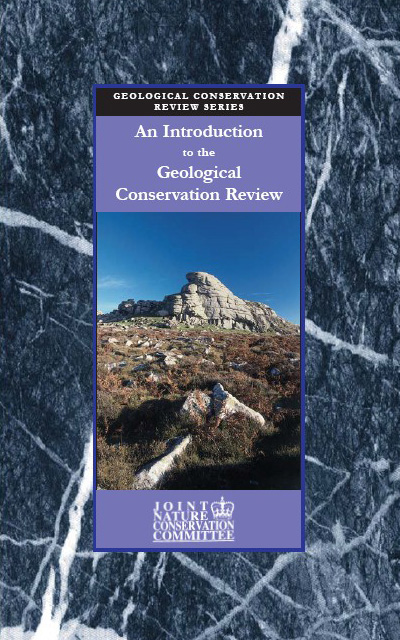
In the 1970s, the first thorough and systematic review of Great Britain’s geoconservation was initiated through the Geological Conservation Review (GCR) by JNCC’s predecessor the Nature Conservancy Council; in Northern Ireland, a similar review – the Earth Science Conservation Review (ESCR) – was undertaken. The GCR and the ESCR were a hugely important step forward in geoconservation, and an international first – no other country in the world has attempted such a systematic and comprehensive review of its geoheritage.
These reviews were designed to identify those sites of national and international importance needed to show all the key scientific elements of our geoheritage.
These sites display sediments, rocks, fossils and features of the landscape that make a special contribution to our understanding and appreciation of geoscience and geological history.
Now, after nearly 50 years of site evaluation, over 3,000 GCR sites and nearly 400 ESCR sites have been identified, encompassing the range of geological and geomorphological features of the UK. Most of these sites are designated as geological Sites of Special Scientific Interest (Areas of Special Scientific Interest in Northern Ireland). These designations enable the sites, and geological features found there, to be conserved and protected. Some internationally recognised sites have gone on to be included as UNESCO Global Geoparks, or natural World Heritage Sites.
The results of the GCR programme are published in a series of books, which describe the scientific importance of each site selected. In total, 36 GCR volumes were published by JNCC and are available through JNCC's Resource Hub. The results of the ESCR are also available online. The GCR publication process transferred to The Geologists’ Association in 2010, and recent GCR descriptions are now published in Proceedings of The Geologists’ Association.
Although much of the initial GCR and ESCR site selection was undertaken between 1977 and 1990, the reviews continue to this day. Existing sites are reassessed, and new sites and features are identified by dedicated specialists in the country nature conservation bodies (Natural England, Natural Resources Wales, NatureScot and Northern Ireland Environment Agency), formally approved by the Chief Scientists’ Group and catalogued on JNCC’s GCR database. The GCR and ESCR underpin the expert geoconservation advice provided by the country nature conservation bodies.
Geodiversity on my doorstep
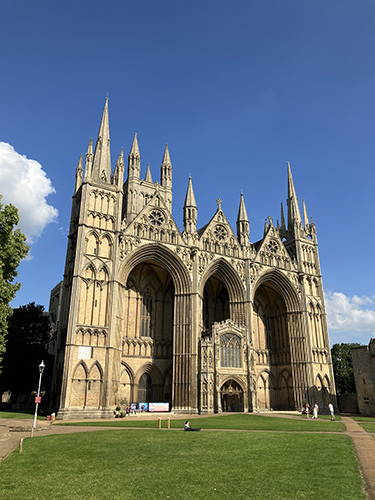
Reflecting on the geodiversity where I live and work, surrounding me is an area of England’s lowland known as the Fens, a striking open landscape at, or even below, sea level. Today it is a landscape drained of waterways that once stretched from the fen edge to the Wash and the North Sea. It’s those fen edges and margins, the slightly (and geologically) higher ground that has influenced where people live, notably the cities of Ely and Peterborough, with their cathedrals sitting proud on the horizon. Which brings me to a particular part of the ‘geodiversity on my doorstep’.
The cathedrals of Peterborough and Ely, and many of the churches and villages in the surrounding area, are built from Barnack Stone. This Middle Jurassic limestone was deposited around 170 million years ago in a shallow tropical sea. Today it is part of a limestone escarpment to the west of Peterborough, stretching from Lincolnshire, across Rutland and Northamptonshire, connecting to the Cotswolds and emerging on the Jurassic Coast World Heritage Site. It is a shelly oolitic limestone which is critically a ‘freestone’ – meaning it can be cut and carved by stone masons with relative ease.
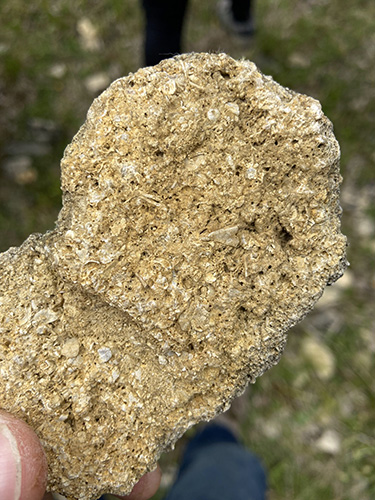
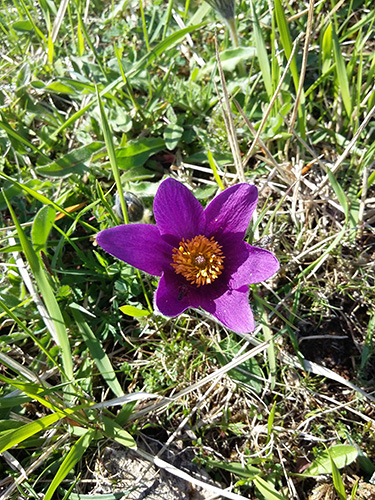
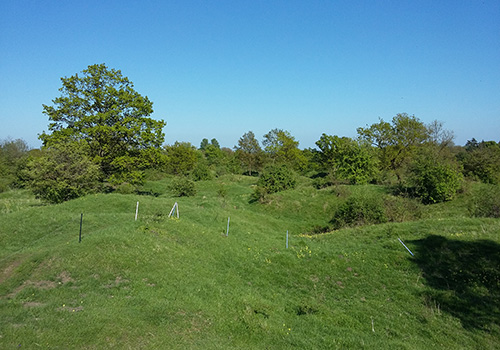
The medieval quarries of Barnack supplied Barnack Stone across the region, transported by those waterways across the Fens. Today, those long disused medieval quarries form Barnack Hills and Holes National Nature Reserve, a stronghold of limestone grassland and the rare Pasque flower, all there today because of the geodiversity on our doorstep.


Celebrating International Geodiversity Day
International Geodiversity Day was first celebrated in 2022, so 2026 will mark the fifth year of events. This year it also follows the first ever UNESCO International Day of Caves and Karst, held on 13 September, a day dedicated to education, conservation, and public awareness of cave and karst environments. A rich diversity of these environments can be found across the UK, including some of the most spectacular natural landscapes, with unique biodiversity, providing classic areas of study. You can find out more about some of these sites in the Karst and Caves of Great Britain GCR Volume.
These international days are of huge importance in highlighting the global recognition of the significance of geodiversity.
Around the country (and around the world) events are being organised to celebrate International Geodiversity Day. To find out more, and to get involved, visit the International Geodiversity Day website.
Image credits (in order of appearance):
- Front cover of GCR Volume 1, 'An Introduction to the Geological Conservation Review' – JNCC
- A piece of Barnack Stone – Jonathan Larwood, Natural England
- Peterborough Cathedral – Jonathan Larwood, Natural England
- Pasque flower – Jonathan Larwood, Natural England
- Barnack Hills and Holes National Nature Reserve – Jonathan Larwood, Natural England
Published: