
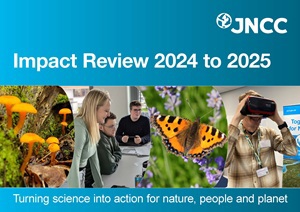
 Protecting Peregrine Falcons, creating Marine Protected Areas and championing nature at global conventions are just some of the critical projects delivered by JNCC and highlighted in our Impact Review, published today.
Covering the period 2024 to 2025, the review sets out how JNCC delivers on its strategy, Together for Nature, and highlights a year of significant progress in turning science into action for nature, people and the planet.
One of the year's standout achievements was JNCC's role at the latest Convention on Biological Diversity Conference of the Parties (COP16), where we supported UK negotiations on the Kunming-Montreal Global Biodiversity Framework. JNCC led negotiations on invasive alien species and sustainable wildlife management, and co-led the development of the Monitoring Framework, which will track global progress towards nature recovery goals.
The review showcases impactful work spanning many areas: from supporting Marine Protected Areas in the Maldives, where a national management framework developed with JNCC has now been adopted by government, to protecting coral reefs across UK Overseas Territories through the Coral Conservation in the Overseas Territories working group. Closer to home, JNCC responded to the Stena Immaculate shipping collision in the North Sea, helping contain the release of aviation fuel and plastic nurdles to protect marine habitats.
The review also highlights JNCC's work to combat the illegal trade in Peregrine Falcons. A significant rise in exports to the Middle East, alongside reports of nest robberies, raised concerns that wild birds were being laundered for breeding. JNCC facilitated the development of DNA parental profiling techniques through the Forensic Working Group and the Partnership for Action Against Wildlife Crime, enabling law enforcement agencies to verify breeding claims. The technology has already contributed to guilty pleas and is supporting ongoing investigations.
JNCC also partnered with the Turks and Caicos Islands government to assess the sustainability of the Queen Conch fishery, the territory's second most important commercial fishery. The work informed a scientific non-detriment finding under the Convention on International Trade in Endangered Species (CITES), providing the tools and evidence needed to secure the fishery's future, protect local livelihoods and ensure compliance with international trade requirements.
Publishing an Impact Review is about more than transparency, it demonstrates the real-world difference that evidence-based expert advice makes to nature recovery. Celebrating these achievements helps build public trust, recognises the dedication of JNCC staff and makes the case for continued investment in nature conservation at a time when it has never been more critical.
Published: